

Welcome, science enthusiasts, parents, and curious minds! Have you ever read a chemistry textbook and felt like the concepts were just abstract formulas floating on a page? You are not alone. Reading about an acid-base neutralization reaction is one thing, but seeing it erupt in front of your eyes is an entirely different experience.
Chemistry is often perceived as a subject confined to highly sterile laboratories filled with bubbling flasks, hazardous chemicals, and strict professors. But the truth is, chemistry is happening all around us, every single second. It’s in the way your bread rises in the oven, the way a cut apple turns brown, and the way soap washes away grease. You don't need a multi-million-dollar lab to be a scientist. Your kitchen, your bathroom, and your backyard hold all the secrets to the universe, waiting to be unlocked.
In this massive, comprehensive guide, we are going to explore the top 10 chemistry experiments you can try at home. Whether you are a parent looking for fun chemistry experiments at home for a weekend activity, a high schooler looking for chemistry experiments for class 10 and 12 to solidify your conceptual understanding, or just an inquisitive soul, this guide is for you.
We have carefully curated a list of easy chemistry experiments at home that are not only visually spectacular but also deeply rooted in core scientific principles. Best of all, these are chemistry experiments with household items, meaning you probably already have everything you need sitting in your pantry right now. Let's dive into the fascinating world of homemade science!
Why You Should Try Chemistry Experiments at Home
Before we put on our imaginary lab coats, let's talk about the "why." Why should you bother mixing vinegar and baking soda when you could just watch a video of it on YouTube? The answer lies in the cognitive psychology of learning.
Human beings are tactile learners. When we physically engage with materials, measure liquids, observe color changes in real-time, and even smell the distinct odor of a reaction, our brains form stronger neural connections. DIY chemistry experiments at home bridge the massive gap between theoretical memorization and practical application.
For students, particularly those preparing for competitive exams or board exams, doing simple science experiments with chemicals at home demystifies the subject. When you grow your own crystals, the concept of "supersaturation" ceases to be a boring paragraph in the NCERT textbook; it becomes a tangible reality. Furthermore, performing these basic chemistry experiments for learning nurtures a scientific temperament—a habit of asking "what if," observing meticulously, and drawing logical conclusions based on evidence.
Essential Safety Rules for Homemade Chemistry Experiments
While we are focusing on safe chemistry experiments at home that use non-toxic, everyday ingredients, the discipline of a scientist must always be maintained. Safety is not a suggestion; it is the fundamental rule of any scientific inquiry. Before you begin any chemistry experiments step by step at home, please adhere to these golden rules:
- Adult Supervision is Mandatory: If you are a young student or a child, an adult must be present at all times. Even household items can cause irritation if misused.
- Protect Your Eyes: Always wear safety goggles. A sudden splash of vinegar or lemon juice in the eye is incredibly painful. If you don't have scientific goggles, clear swimming goggles or even regular glasses provide a basic barrier.
- Dress for the Lab: Avoid wearing loose, flowing clothing. Tie back long hair. Wear an apron or an old t-shirt that you don't mind getting stained with food coloring.
- Ventilation is Key: Ensure the room you are working in has good airflow. Open a window if necessary, especially when working with anything that produces gas.
- No Tasting: Unless the experiment explicitly states it is a food-science experiment meant to be eaten (none on this specific list are), absolutely no tasting of chemicals or products, even if they smell good.
- Clean Up Thoroughly: Wash your hands with soap and water immediately after finishing. Wipe down your workstation and dispose of materials down the drain with plenty of running water, as instructed.
Now that we have established our safety protocols, it is time to turn your kitchen into a laboratory. Let's begin our countdown of the most interesting chemistry experiments at home!
The Science of Acids and Bases
Acids and bases are the yin and yang of chemistry. They are all around us. The sour taste of a lemon comes from citric acid, while the slippery feel of soap is a characteristic of a base. When these two opposing forces meet, they undergo a neutralization reaction, often resulting in spectacular physical changes. Let's explore this with some highly engaging chemistry practical experiments at home.
Experiment 1: The Classic Baking Soda and Vinegar Volcano
This is arguably the most famous of all homemade chemistry experiments. It is the quintessential rite of passage for every aspiring scientist. It is visually explosive, incredibly safe, and beautifully illustrates a multi-step chemical reaction.
What You Need:
- Baking soda (Sodium Bicarbonate)
- White vinegar (Acetic Acid)
- A plastic bottle or a tall glass
- Dish soap (optional, but highly recommended for better foam)
- Red or orange food coloring
- A baking sheet or tray (to catch the mess!)
The Procedure:
- Place your plastic bottle in the center of the baking tray. If you want to get creative, you can build a papier-mâché or clay volcano structure around the bottle beforehand.
- Fill the bottle about one-third full with warm water.
- Add a generous squirt of dish soap and a few drops of red food coloring to the water. Swirl gently to mix.
- Add 3 to 4 tablespoons of baking soda into the bottle.
- Are you ready for the eruption? Pour about half a cup of vinegar directly into the bottle and step back!
The Science Behind It
When you mix baking soda (a base) with vinegar (an acid), you are actually witnessing a two-step chemical reaction. First, a double displacement reaction occurs, creating carbonic acid and sodium acetate.
Equation: NaHCO3 + HC2H3O2 → NaC2H3O2 + H2CO3
However, carbonic acid is highly unstable. It immediately undergoes a decomposition reaction, breaking apart into liquid water and carbon dioxide gas.
Equation: H2CO3 → H2O + CO2
The carbon dioxide gas ( CO_2 ) rapidly expands and wants to escape the bottle. As it bubbles up, it mixes with the dish soap we added, creating millions of tiny, colorful bubbles that overflow the bottle, mimicking a volcanic eruption. This demonstrates acid-base neutralization, gas production, and the action of surfactants (soap) all at once!
Experiment 2: Invisible Ink with Lemon Juice
Who doesn't love a good spy mystery? This is one of the coolest chemistry experiments for kids at home that involves secret messages and reveals the fascinating process of organic oxidation.
What You Need:
- Half a lemon
- Water
- A spoon or bowl
- A cotton swab (Q-tip) or a fine paintbrush
- Blank white paper
- A heat source (a hairdryer, a hot iron, or a lightbulb) - Adult supervision strictly required here.
The Procedure:
- Squeeze the lemon juice into the bowl and add a few drops of water to dilute it slightly. Mix it well.
- Dip your cotton swab into the lemon juice mixture. This is your "invisible ink."
- Write a secret message or draw a picture on the blank white paper using the swab.
- Allow the paper to dry completely. The juice will become virtually invisible.
- To reveal the message, an adult must carefully hold the paper close to a hot lightbulb, use a hot hairdryer on it, or gently iron the paper (without steam). Watch as the invisible ink slowly turns brown, revealing your secret!
The Science Behind It
Lemon juice is an organic substance that contains carbon compounds (specifically, citric acid and ascorbic acid). These compounds are relatively colorless when dissolved in water and dried on paper. However, these carbon compounds break down easily when exposed to heat.
When you heat the paper, the carbon compounds in the dried lemon juice undergo an oxidation reaction. Oxidation occurs when a substance comes into contact with oxygen under heat. As the carbon compounds oxidize, they break down and release carbon, which turns brown or black when heated. Since the lemon juice is slightly acidic, it also weakens the paper fibers slightly in those specific areas, making the ink burn slightly faster than the surrounding paper. This is why the message appears dark against the white background.
Experiment 3: The Rubber Egg in Vinegar
Can you make a raw egg bounce without breaking it? Yes, you can! This experiment takes a few days, but it is one of the most remarkable easy science experiments at home chemistry can offer, demonstrating decalcification and osmosis.
What You Need:
- One raw egg
- A tall, clear glass or a mason jar
- White vinegar (enough to submerge the egg)
- Patience! (Takes 48 to 72 hours)
The Procedure:
- Gently place the raw egg into the glass or jar. Be careful not to crack it.
- Pour white vinegar into the glass until the egg is completely submerged.
- Immediately, you will notice tiny bubbles forming on the shell of the egg. Leave the glass in a safe place.
- After 24 hours, carefully pour out the old vinegar and replace it with fresh vinegar. You will notice the egg looks fuzzy and the shell is dissolving.
- Wait another 24 to 48 hours. Carefully remove the egg and gently rinse it under a slow stream of water, rubbing the remaining chalky shell off with your thumb.
- You now have a translucent, squishy, rubbery egg! You can gently bounce it on a table from a height of 1-2 inches. (Do it on a plate in case it breaks!).
The Science Behind It
An eggshell is made primarily of calcium carbonate ( CaCO3 ). Vinegar is a dilute solution of acetic acid ( CH3COOH ). When these two meet, an acid-base reaction occurs.
Equation: CaCO3 + 2CH3COOH → Ca(CH3COO)2 + H2O + CO2
The acetic acid dissolves the rigid calcium carbonate shell, turning it into calcium acetate (which is water-soluble), water, and carbon dioxide gas (which are the bubbles you saw forming on day one). Once the hard shell is completely dissolved, what holds the egg together? It is the semi-permeable membrane that naturally exists just inside the shell. Furthermore, through a process called osmosis, some of the water from the vinegar travels through this membrane into the egg, making the rubber egg slightly larger than the original raw egg.
Exploring Gases and Pressure
Gases are sneaky. They are mostly invisible, yet they exert pressure, take up space, and are the driving force behind many dynamic chemical reactions. Let's look at some cool chemistry experiments to try at home that capture and utilize gases.
Experiment 4: Inflating a Balloon with Yeast and Sugar
This experiment crosses the boundary between chemistry and biology, showcasing cellular respiration and gas production. It is an excellent example of simple chemistry experiments for students.
What You Need:
- 1 packet of active dry yeast (used in baking)
- 2 tablespoons of sugar
- Warm water (not boiling, just warm to the touch)
- An empty, clean plastic bottle (like a standard water bottle)
- A deflated balloon
The Procedure:
- Stretch the balloon out a few times to loosen the rubber.
- Pour about an inch of warm water into the plastic bottle.
- Add the packet of yeast and gently swirl the bottle to mix it with the water.
- Add the 2 tablespoons of sugar into the mixture and swirl again until mostly dissolved.
- Quickly stretch the neck of the balloon over the opening of the plastic bottle, ensuring a tight seal.
- Place the bottle in a warm spot and observe over the next 30 to 60 minutes. The balloon will miraculously begin to inflate by itself!
The Science Behind It
Yeast consists of tiny, single-celled microscopic living organisms. Like us, they need food and warmth to thrive. In their dormant state in the packet, they are inactive. When you add warm water, they "wake up." However, just water isn't enough; they need fuel.
By adding sugar, you provide them with glucose. The yeast organisms consume the sugar and undergo a chemical process called fermentation (a type of anaerobic respiration). As they digest the sugar, they excrete two byproducts: alcohol (ethanol) and carbon dioxide gas ( CO2 ). As the yeast continues to feast on the sugar, more and more carbon dioxide gas is produced. Since the bottle is sealed by the balloon, the gas has nowhere to go but up, increasing the pressure inside the bottle and pushing against the rubber of the balloon, causing it to inflate.
Experiment 5: The Elephant Toothpaste (Safe Household Version)
If you search for "Elephant Toothpaste" online, you will see massive, ceiling-high eruptions using highly concentrated hydrogen peroxide and potassium iodide. Those are dangerous and strictly for professional labs. However, we can create a completely safe chemistry experiment at home using standard household peroxide.
What You Need:
- 1/2 cup of 3% or 6% Hydrogen Peroxide (available at pharmacies)
- 1 tablespoon of dry active yeast
- 3 tablespoons of warm water
- Liquid dish soap
- Food coloring
- An empty plastic bottle
- A small cup or bowl
- A baking tray with high edges (this will get messy!)
The Procedure:
- Place the empty plastic bottle in the center of the baking tray.
- Carefully pour the 1/2 cup of hydrogen peroxide into the bottle.
- Add a generous squirt of dish soap to the peroxide and swirl gently.
- Squeeze a few drops of food coloring down the sides of the bottle to create a striped toothpaste effect.
- In the separate small cup, mix the warm water and the dry active yeast. Stir for about 30 seconds to activate the yeast.
- Now, for the grand finale: Pour the yeast mixture into the bottle and step back immediately! A massive, thick column of foam will rapidly squeeze out of the bottle, looking just like toothpaste fit for an elephant.
The Science Behind It
Hydrogen peroxide is a chemical compound with the formula H_2O_2 . It is very similar to water ( H_2O ) but has an extra oxygen atom. Over time, hydrogen peroxide naturally breaks down into water and oxygen gas. However, this process is usually very slow.
Equation: 2H2O2 → 2H2O + O2 (gas)
When you add the yeast, it acts as a catalyst. A catalyst is a substance that dramatically speeds up a chemical reaction without being consumed by it. The yeast contains an enzyme called catalase, which immediately tears the extra oxygen atoms off the hydrogen peroxide molecules. This rapid release of oxygen gas ( O_2 ) gets trapped in the dish soap, creating a massive amount of foam instantly. Furthermore, if you touch the foam (it is just soap, water, and oxygen, so it is safe), you will notice it is warm. This is because the decomposition of hydrogen peroxide is an exothermic reaction, meaning it releases heat energy!
The Magic of Crystallization and Density
Physics and chemistry often hold hands. Understanding how molecules arrange themselves in solid lattices or how they interact based on mass and volume leads to some of the most visually stunning chemistry experiments for beginners.
Experiment 6: Growing Sugar Crystals (Rock Candy)
This is a classic experiment that demonstrates supersaturation and crystallization. Plus, it is the only experiment on this list that you can safely eat when you are finished! It requires patience, making it a great long-term observation project.
What You Need:
- 1 cup of water
- 3 cups of granulated white sugar
- A clean glass jar (like a mason jar)
- A wooden skewer or a clean cotton string tied to a pencil
- A clothespin
- Food coloring and flavor extract (optional)
- A saucepan and stove (Adult supervision required)
The Procedure:
- Prepare your skewer or string: Dip it in water, then roll it in dry sugar. Let it dry completely. These act as "seed crystals."
- In a saucepan, bring the 1 cup of water to a boil.
- Gradually add the 3 cups of sugar, half a cup at a time, stirring continuously until each batch is completely dissolved before adding more. This will take time, and the liquid will become thick and syrupy.
- Once all sugar is dissolved, remove from heat. Add food coloring and flavor if desired. Let the syrup cool for 20 minutes.
- Carefully pour the syrup into the glass jar.
- Lower your prepared, dried skewer/string into the syrup. Use the clothespin to suspend it so it does not touch the bottom or sides of the jar.
- Place the jar in a quiet, cool place where it won't be disturbed. Wait 5 to 7 days, observing the crystal growth daily. Once they are big enough, pull them out, let them drip dry, and enjoy!
The Science Behind It
At room temperature, water can only dissolve a certain amount of sugar. This is its saturation point. However, when you heat the water, the water molecules move faster and spread further apart, allowing you to dissolve significantly more sugar than you normally could. This creates a supersaturated solution. It is a highly unstable state; the water is holding more sugar than it "wants" to at room temperature.
As the syrup slowly cools down over the days, the water molecules slow down and come closer together. There is no longer room for all that dissolved sugar. The sugar molecules begin to fall out of the solution (precipitate) and latch onto the "seed crystals" you placed on the skewer. Over time, more and more sugar molecules join the lattice structure, growing into the large, geometric crystals you see as rock candy.
Experiment 7: The Density Tower of Liquids
Why do oil and water not mix? Why does a heavy rock sink while a massive wooden ship floats? This stunning visual experiment explores density and miscibility, making it one of the best chemistry experiments for school students to visualize abstract physical chemistry concepts.
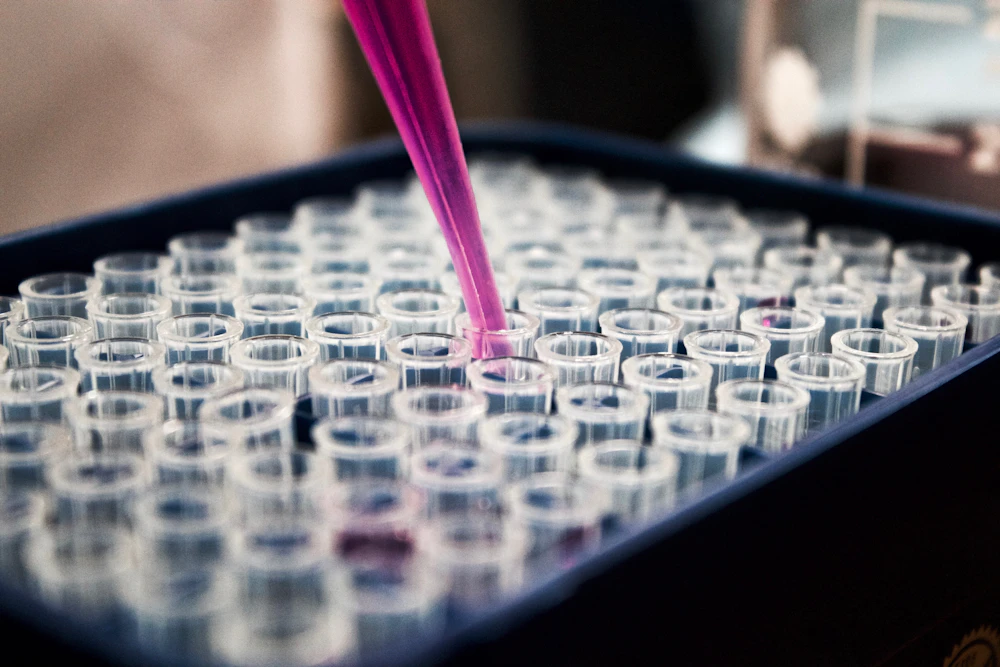
An illustration of liquids separating based on their varying densities.
What You Need:
- A tall, clear glass or a clean, empty glass bottle
- Honey or Corn Syrup
- Liquid dish soap (blue or green looks best)
- Water (colored with food dye for visibility)
- Vegetable oil
- Rubbing alcohol (colored with a different food dye)
- A turkey baster or a dropper
The Procedure:
- The key to a perfect density tower is pouring slowly and in the exact right order. Start by pouring a thick layer (about an inch) of honey directly into the center of the glass. Try not to let it touch the sides.
- Next, slowly pour an equal layer of liquid dish soap over the honey.
- For the water layer, tilt the glass slightly and pour the colored water very slowly down the side of the glass. Do not pour it directly into the center, or it will mix with the soap.
- Repeat the same gentle, tilted-pouring technique for the vegetable oil.
- Finally, use the turkey baster or dropper to carefully layer the colored rubbing alcohol on top of the oil.
- Stand back and admire your distinctly layered liquid tower!
The Science Behind It
This experiment relies on two distinct chemical principles: Density and Miscibility.
Density is defined as mass per unit volume ( D = M / V ). It essentially measures how tightly packed the molecules of a substance are. Honey has tightly packed molecules, making it very dense and heavy, so it sinks to the very bottom. Rubbing alcohol has loosely packed molecules, making it the least dense, so it floats on top. The layers arrange themselves strictly by their specific densities.
But why don't they just mix together into a brown sludge? This is due to Miscibility, driven by molecular polarity. Water and rubbing alcohol are polar molecules, while vegetable oil is a non-polar molecule. A fundamental rule of chemistry is "like dissolves like." Polar liquids will not mix with non-polar liquids. Because the non-polar oil layer is sandwiched between the polar water and polar alcohol layers, it acts as a barrier, keeping the entire tower perfectly separated.
Fascinating Color Changes and Surface Tension
Chemistry isn't just about explosions and test tubes; it's also about the subtle, beautiful interactions at the molecular level. Let's look at some easy chemistry experiments at home that feel almost like magic.
Experiment 8: Magic Milk Color Explosion
This is a fast, vibrant experiment that visually demonstrates the power of surfactants and surface tension. It is universally loved and is a staple in lists of fun chemistry experiments at home.
What You Need:
- Whole milk (must be whole milk, skim milk will not work as well)
- A shallow dish or plate
- Liquid food coloring (3 to 4 different colors)
- Liquid dish soap
- Cotton swabs (Q-tips)
The Procedure:
- Pour a thin layer of whole milk into the shallow dish, just enough to cover the bottom completely. Let it sit for a moment to become completely still.
- Carefully squeeze one drop of each color of food coloring into the center of the milk. Keep the drops close together but not overlapping.
- Take a clean cotton swab and touch the tip to the center of the colors. Notice that nothing much happens.
- Now, dip the other end of the cotton swab into the liquid dish soap. You just need a drop on the tip.
- Gently touch the soapy end of the swab to the exact center of the food coloring drops in the milk. Hold it there for a few seconds.
- Watch in amazement as the colors violently explode outward in a swirling, continuous kaleidoscope of patterns!
The Science Behind It
Milk is mostly water, but it also contains vitamins, minerals, proteins, and crucially, tiny droplets of fat suspended in the liquid. Water molecules have high surface tension because they like to stick together (cohesion). The food coloring is less dense than milk, so it floats on the surface tension.
Dish soap is a surfactant. Its molecules have two distinct ends: a hydrophilic (water-loving) end and a hydrophobic (water-fearing, but fat-loving) end. When you touch the soapy swab to the milk, two things happen instantly. First, the soap breaks the surface tension of the water, causing the surface layer to rapidly spread outward, dragging the food coloring with it.
Secondly, the hydrophobic ends of the soap molecules frantically race around the dish trying to attach themselves to the fat molecules in the whole milk. This microscopic race creates invisible currents and churning within the milk, which we can vividly see as the food coloring swirls and dances around the plate for several minutes.
Experiment 9: Cleaning Pennies with Vinegar and Salt
Do you have dull, dirty, greenish-brown copper coins lying around? You can restore them to their brilliant, shiny factory condition using basic pantry items. This is a brilliant introduction to oxidation-reduction (redox) reactions.
What You Need:
- A handful of dull, dirty copper pennies (or copper-plated coins)
- 1/4 cup of white vinegar
- 1 teaspoon of table salt
- A shallow glass or plastic bowl (not metal)
- Water for rinsing
- Paper towels
The Procedure:
- Pour the vinegar into the non-metal bowl.
- Add the salt and stir until it is completely dissolved.
- Dip one dirty penny halfway into the liquid and hold it there for 10 seconds. Pull it out and look at the stark contrast between the submerged half and the dry half!
- Drop the rest of the dirty pennies into the bowl and let them sit for 5 minutes.
- Take them out, rinse them thoroughly under running water, and dry them with a paper towel. They will look brand new.
The Science Behind It
Pennies get dull and dirty over time because the copper on their surface reacts with oxygen in the air to form copper oxide ( CuO ). This oxidation process creates a dull, greenish-brown tarnish that cannot be washed away with normal soap and water.
When you mix vinegar (acetic acid) and table salt (sodium chloride), you create a weak solution of hydrochloric acid and sodium acetate. The acid dissolves the copper oxide layer on the penny. The chloride ions from the salt act as a catalyst, significantly speeding up the reaction. The acid strips away the tarnish, leaving the pure, shiny copper metal underneath exposed once again. (Note: Rinsing them is crucial. If you don't rinse the acid off, the copper will react with the oxygen in the air even faster, turning them green—forming malachite—within a day!)
Experiment 10: The Dancing Raisins
Our final experiment is a fun, whimsical demonstration of buoyancy and nucleation points. It uses minimal ingredients and provides endless entertainment for younger students.
What You Need:
- A tall, clear drinking glass
- Fresh, clear carbonated soda (Sprite, 7-Up, or Club Soda work best)
- A handful of fresh raisins (not too dry or clumped together)
The Procedure:
- Fill the clear glass about three-quarters full with the fresh carbonated soda. You should see plenty of bubbles rising to the top.
- Drop 5 to 7 raisins into the glass.
- Initially, the raisins will sink to the bottom because they are denser than the liquid.
- Watch closely for the next minute. You will see the raisins slowly rise to the surface, float for a second, and then sink back to the bottom. They will continue to "dance" up and down for several minutes!
The Science Behind It
This experiment relies on buoyancy. Initially, the raisins are denser than the soda, so they sink. Carbonated soda is packed with dissolved carbon dioxide ( CO2 ) gas. If you look closely at a raisin, its surface is not smooth; it is highly wrinkled and rough.
These rough spots act as nucleation sites. The dissolved carbon dioxide gas molecules in the soda naturally gather in these microscopic crevices and form bubbles. As more and more gas bubbles attach to the wrinkly surface of a raisin, they act like tiny life jackets. The combined volume of the raisin and the attached gas bubbles becomes less dense than the surrounding soda, causing the raisin to float to the top.
Once the raisin reaches the surface, the gas bubbles are exposed to the air and pop. Losing its "life jackets," the raisin becomes dense again and sinks back to the bottom, where it gathers new bubbles, repeating the endless dance!
The Educational Impact of Chemistry Practical Experiments at Home
We have covered volcanoes, dancing raisins, and color explosions. But beyond the sheer entertainment value, why are these top 10 chemistry experiments you can try at home so vital for a student's educational journey?
In the Indian education system, the jump from middle school science to high school chemistry can be jarring. Suddenly, students are faced with balancing complex equations, understanding molarity, and memorizing periodic trends. This theoretical overload can lead to rote memorization, which, as we discussed earlier, is detrimental for competitive exams like NEET and JEE.
Performing chemistry practical experiments at home creates "Mental Hooks." When a student learns about Oxidation states in Class 11, they can mentally hook that abstract concept to the physical memory of cleaning pennies with vinegar and salt. When a Class 12 student is studying Surface Chemistry and Colloids, the memory of the Magic Milk experiment provides immediate, intuitive understanding.
By engaging in these chemistry experiments for class 10 and 12, students transition from passive readers to active scientists. They learn troubleshooting—if the yeast balloon didn't inflate, was the water too hot and killed the yeast? Was there a leak in the seal? This analytical troubleshooting is the exact mindset required to solve high-order thinking skills (HOTS) questions in board exams. So, gather your household items, embrace the mess, and let the learning begin!
Ready to Master Chemistry for NEET & Boards?
Don't let chemistry hold back your medical or engineering dreams. Move beyond rote memorization and join a community of top achievers who understand the concepts deeply.
Join Satyakam Sir's Masterclass TodayFrequently Asked Questions About DIY Chemistry

About Satyakam Sir
Satyakam Sir is a passionate Chemistry educator dedicated to making science accessible, logical, and fun. With over 15 years of experience mentoring NEET, JEE, and Board exam aspirants, he firmly believes that the best way to learn chemistry is not by reading a textbook, but by experiencing the reactions firsthand. His mission is to cultivate a scientific temperament in every student across India.